Let’s be honest—most networking events are a special kind of awkward.
You walk into a room full of strangers, grab a drink you don’t really want, and brace yourself for the same recycled conversations:
“So… what do you do?”
“How long have you been with your company?”
“That’s interesting…”
It’s not that people don’t want to connect—it’s that the format makes it hard. Forced small talk, unclear structure, and zero shared experience create friction right from the start.
But what if you flipped the script?
What if, instead of expecting people to manufacture connections… you gave them a reason to connect naturally?
That’s where a game show comes in.
The Real Problem With Networking Events
Before we fix it, let’s call out what’s broken:
- No clear starting point – People don’t know who to approach or how to begin
- High social pressure – Everyone feels like they’re being evaluated
- Repetitive conversations – The same questions, over and over
- No shared experience – Nothing bonds the group together
In short: networking events put all the burden on attendees to create something out of nothing.
Why a Game Show Changes Everything
A well-run game show flips networking from work into play.
Here’s what happens when you introduce one:
1. Instant Icebreaker (Without the Cringe)
Instead of awkward introductions, people are laughing, guessing answers, and reacting together within minutes.
No one has to “break the ice”—the game does it for them.
2. Built-In Conversation Starters
After a round ends, conversations become:
- “I can’t believe you knew that!”
- “How did your team get that answer?”
- “We got robbed on that question.”
Way better than “So… what do you do?”
3. Shared Experience = Faster Connection
People bond over doing something together. A game creates:
- Inside jokes
- Friendly competition
- Memorable moments
That’s the kind of stuff people actually remember—and talk about after the event.
4. Lower Social Pressure
When the focus is on the game, not the individual:
- Introverts feel more comfortable participating
- Extroverts still get their energy fix
- No one feels “on the spot” to perform socially
It levels the playing field in the best way.
What This Looks Like in Practice
You don’t need a massive production. A simple structure works:
Step 1: Break Into Teams
Small groups (4–6 people) work best. Bonus: assign teams randomly so people meet someone new.
Step 2: Run a High-Energy Game
Think:
- Trivia (pop culture, industry, or mixed)
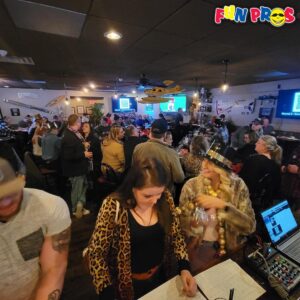
- Music bingo or Guess That Groove
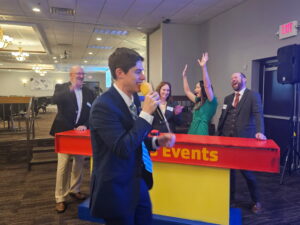
- Survey-style games (like Fun Pros Feud)
The key is accessibility—everyone should be able to participate, not just experts.
Step 3: Keep It Moving
Fast rounds, lots of interaction, and an engaging host keep energy high.
Step 4: Transition Into Open Networking
After the game, the room feels completely different:
- People already know each other
- Conversations start naturally
- Energy stays high instead of fizzling out
Why This Works (Psychologically)
A game show taps into a few powerful human instincts:
- Play – We’re naturally more open and relaxed when we’re having fun
- Collaboration – Teams create instant micro-communities
- Competition – Just enough stakes to keep people engaged
- Storytelling – People leave with something to talk about
Instead of forcing connection, you enable it.
The ROI: Why Event Planners Love This
If you’re organizing a corporate event or networking mixer, this isn’t just “fun”—it’s effective.
You get:
- Higher engagement
- Better attendee feedback
- More meaningful connections
- A more memorable event overall
And let’s be honest—standing out matters. No one remembers another standard networking hour.
They do remember the time their team won (or lost) in dramatic fashion.
Final Thought
Networking doesn’t have to be painful.
If you give people a reason to laugh, collaborate, and share a moment, the connections take care of themselves.
So next time you’re planning an event, skip the awkward small talk.
Run a game show—and watch the room come alive.