Why the Quality of the Experience Matters More Than the Plan
Most team events in Chicago start with the right intention, but somewhere between the idea and execution, things get flattened out. Companies want connection, better communication, maybe even a bit of morale repair, and that is exactly why they look for the best corporate team-building activities in Chicago. The irony is that the outcome rarely depends on effort alone. It depends on whether the experience actually gives people something to do together, not just something to attend. When that part is off, you can feel it almost immediately in the room, usually within the first fifteen minutes, when energy does not pick up the way everyone expected it to.
Mistake 1: Choosing the Venue Before Understanding the Experience
This is the one that shows up more often than people admit. A company finds a nice space, maybe a rooftop or a hotel ballroom, and assumes the job is halfway done. But a venue does not create interaction on its own. People still sit, wait, look around, and wonder what comes next. The stronger events, especially the best corporate team-building activities in Chicago, usually flip that thinking entirely. They start with interaction first, then build everything around it. Otherwise, you end up with a good-looking room and a group of people who are still mentally at their desks.
Mistake 2: Forgetting That Not Everyone Participates the Same Way
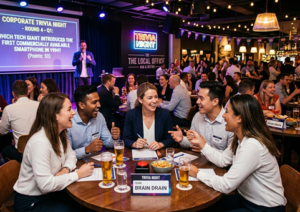
Teams are not uniform, even if we sometimes plan like they are. There are always people who jump into competition immediately, and others who take a while to warm up, and a few who only engage when the format feels safe enough. When activities ignore that mix, participation quietly drops. This is where formats like trivia or game-based experiences tend to work better than expected. In fact,corporate trivia night events in Evanston have become popular for exactly this reason, because the structure naturally lets different personalities participate without forcing anyone into a role they do not want.
Mistake 3: Treating Facilitation Like an Afterthought
It is easy to underestimate the person running the room. On paper, the activity looks self-explanatory, but in reality, pacing is everything. A good host is not just reading instructions; they are reading the room, adjusting energy, slowing things down when needed, pushing it forward when it dips. Without that, even well-designed activities start to feel loose or slightly confusing. And once confusion enters, engagement usually follows it out the door.
Mistake 4: Packing the Schedule Too Tightly
There is a very common instinct to fill every minute, as if more activity equals more value. What actually happens is the opposite. People start rushing mentally before they even get comfortable. You can see it in the way conversations do not fully land, or how teams move on from moments too quickly. The better events give space, not just structure. They allow pauses that do not feel like gaps but like part of the experience. That breathing room is often what people remember later, even if they do not articulate it that way.
Mistake 5: Using a Generic Format for Every Team
This one is subtle because it does not always fail loudly. A generic format will still run, people will still participate, but something feels slightly off, like the experience is not really theirs. Teams have their own internal rhythm, inside jokes, communication styles, and even unspoken hierarchies. When events ignore that, everything stays surface level. Small adjustments, like tailoring themes or adjusting challenge types, tend to change the atmosphere more than people expect. It stops feeling like an “event” and starts feeling like something built for them specifically.
Mistake 6: Turning It Into a Formal Exercise Without Meaning to
Sometimes companies drift into a workshop mindset without realizing it. The language becomes about outcomes, alignment, and objectives, and suddenly the tone shifts. People sense it immediately. They participate, but cautiously. The best events do not try to erase purpose; they just wrap it in something lighter. That is usually where experiential formats work best, especially interactive game-style setups that make participation feel natural instead of instructed.
Pulling It All Together
When you step back, most of these mistakes are not dramatic. They are small planning decisions that add up quietly. But they do change the experience in a noticeable way. The events that land well, the ones people actually talk about later, usually have one thing in common: they are built around interaction first, not logistics. That is the thinking behind thebest corporate team-building activities in Chicago when they are done right, where the focus stays on how people connect in the moment rather than how polished the agenda looks on paper.
Conclusion
Good team building is rarely about complexity. It is more about restraint, choosing the right kind of activity, giving it the right structure, and then letting people actually experience it without overloading the moment. If your team is at the point where you are trying to create something more engaging and less routine, it may be worth approaching it differently this time. When you are ready to build an event that feels natural, energetic, and genuinely participatory, Fun Pros Events is one of those names worth considering as you plan it with intention and bring your team into something they will actually want to be part of.
FAQs
The most effective activities are interactive and participation-driven, like game shows, trivia, and collaborative challenges. They work better than passive sessions because they keep everyone engaged throughout.
Most events fail because they focus too much on logistics or venue instead of actual interaction. When employees are not actively involved, engagement drops quickly.
A skilled host is critical because they control pacing, energy, and clarity throughout the event. Without strong facilitation, even good activities can feel confusing or flat.
Yes, because game-based formats encourage natural participation instead of forced interaction. They make communication and teamwork feel more effortless and enjoyable.
By choosing activities that balance competition and collaboration, different personalities can participate comfortably. Formats like trivia and game shows help ensure everyone feels included.