Are you choosing an experience or just a place to gather people?
Most corporate events start with a simple assumption that if people are in the same room, something meaningful will happen. That rarely holds up. The reality is that the outcome depends almost entirely on structure, not setting. In Wisconsin, where teams often swing between formal office culture and more relaxed social plans, it is easy to lean toward familiar options likecountry bars in Milwaukee, Wisconsin, because they feel effortless to organize. The problem is that “easy” does not always mean “useful”. If the goal is stronger communication or better team chemistry, then the experience has to be built with intention, not left to chance or atmosphere.
What should you actually be asking about how the event runs?
This is usually where most decisions go a bit shallow, and it shows later. It is not enough to know that an event is “interactive” or “fun.” You need to understand what actually happens minute by minute. A well-run experience should be able to answer questions without hesitation and in clear, precise language. At this stage, it helps to ask more grounded questions, such as:
- How does the event begin and set the tone for participation
- How are teams created so that engagement feels balanced
- What happens when one group dominates or falls behind
- How is energy managed when the room starts to drift
- How does the host adjust pacing in real time if needed
These are the details that reveal whether the experience is actively guided or simply delivered as a fixed routine. The difference becomes obvious once you are in the room.
What actually makes a team-building game show in Wisconsin work well?
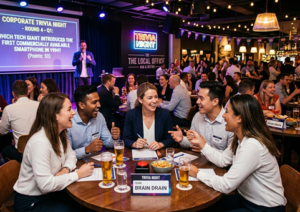
A team-building game show in Wisconsin can look simple from the outside, but what makes it effective is not the format; it is how people respond inside it. The structure only works when it gently pushes communication without making it feel forced. You notice it when quieter people start speaking up naturally, or when decisions start happening through conversation instead of one person taking over. The strongest versions of these experiences feel steady rather than chaotic, and there is usually a sense that the group is being guided without being micromanaged. That balance is harder to achieve than it looks.
How do social outings compare with structured team experiences?
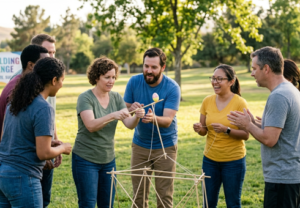
When places like country bars in Milwaukee, Wisconsin, come up as an easy fallback, there is always that natural comparison people make between a planned team event and a casual night out. And honestly, both have their place, even if it is not always equal. A bar setting is good for letting people relax, switch off a bit, and talk without any structure getting in the way. But that same lack of structure is also a limitation. Nothing is really steering the interaction, so people usually stick with the colleagues they already know, and conversations stay within familiar circles. Structured experiences work differently because they gently push people to mix and engage in ways they normally would not, without making it feel forced or awkward. That is often where you see the real shift, in those small moments where people from different parts of the team actually end up working or thinking together.
What does good execution actually look like when you are in the room?
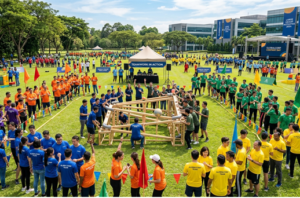
Execution is one of those things that is hard to describe beforehand but very easy to notice once it is happening. A well-run event feels like it is moving on its own without pauses that feel awkward or instructions that drag on too long. There is no sense of being stuck waiting for what is going to happen next; the pacing is consistent, and transitions are seamless. Good facilitators read the room and adjust without drawing attention to the fact that they are adjusting. Companies like Fun Pros Events tend to stand out in this space because the experience feels controlled without being rigid, which is a subtle but important difference.
Conclusion
At some point, you have to stop thinking in terms of what sounds fun and start thinking in terms of what actually changes how people work together afterward. It is easy to default to familiar plans like country bars in Milwaukee, Wisconsin, for a group night because they require almost no explanation and feel safe to choose. But safety and impact are not the same thing. The better question is whether the experience creates any shift in communication, trust, or comfort among your team once they are back in the office. If it does not, then it is just another evening out. If it does, then it is worth paying attention to. And when you are ready to move in that direction, the next step is simply choosing something that is structured enough to guide people, but flexible enough to keep them engaged without forcing it.
FAQs
An effective event has a clear structure, guided interaction, and active facilitation. It should encourage participation from everyone, not just a few outgoing individuals.
They work well for relaxation and informal bonding, but they usually lack structure. Without guided activities, meaningful cross-team interaction often stays limited.
Ask how the event is structured, how teams are formed, and how engagement is maintained throughout. Also, check how the host adapts when energy or participation changes.
Good facilitation keeps the experience balanced, engaging, and inclusive. It ensures the event flows smoothly without losing energy or direction.
Look for experiences designed to encourage collaboration under light pressure. If people naturally start interacting across groups, it is usually a strong sign that it will have a lasting impact.